Padel shoes: what to know before you buy
22 June 2026
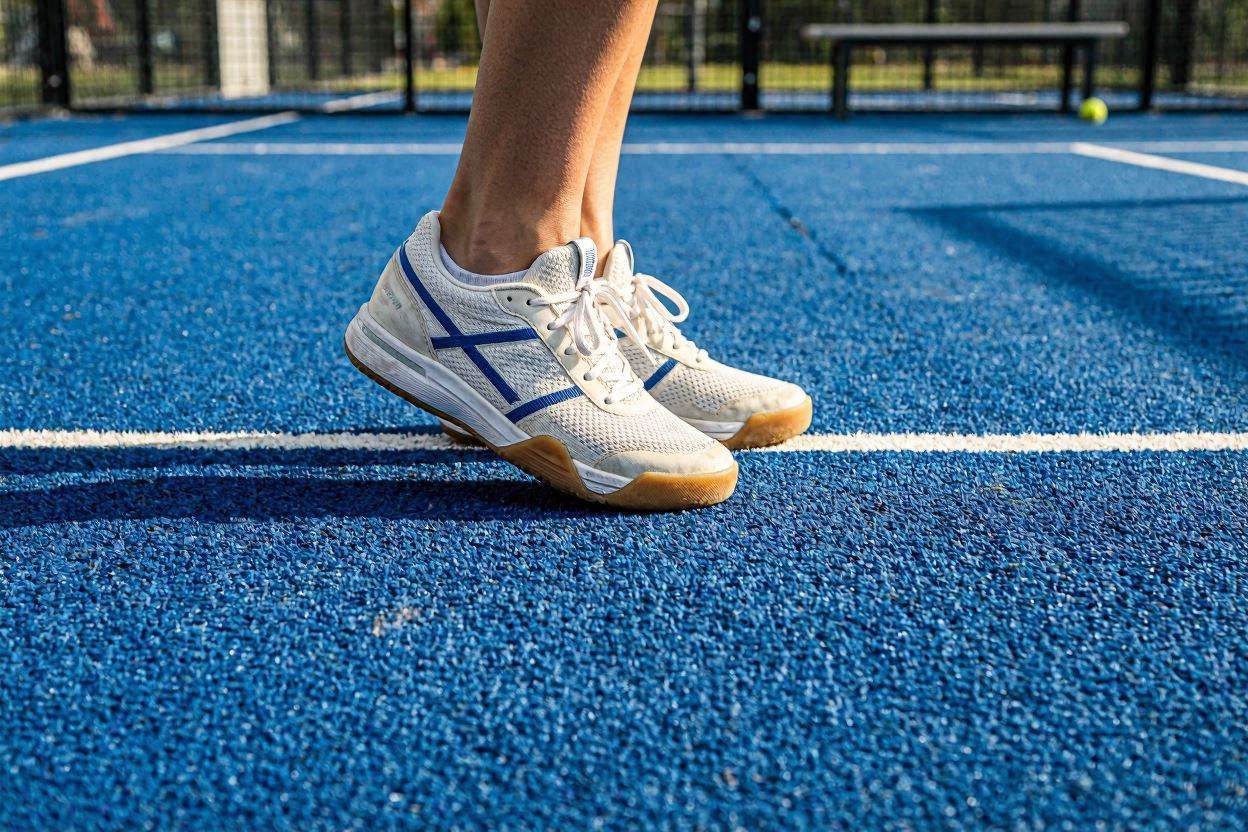
Plenty of beginners play their first matches in running shoes or regular gym trainers. It works - until your knee or ankle disagrees. Padel involves a lot of lateral movement, sudden stops, and direction changes, which puts very different demands on a shoe than running does.
Sole and tread pattern
Padel is usually played on artificial turf with sand infill, which needs a tread pattern that grips without “catching” on the surface. Most padel shoes use a herringbone pattern, a good compromise between grip and lateral mobility.
Running shoes often have tread that’s too aggressive for turf and can catch when you rotate your foot, increasing the risk of ankle sprains.
Lateral stability
This is the biggest difference from regular training shoes. A padel shoe has reinforcement on the sides to support your foot during fast lateral movement. Running shoes are built for forward motion and usually lack that support entirely.
Forefoot cushioning
Padel involves a lot of explosive starts and stops, often with your weight on your forefoot near the net. Good padel shoes add extra cushioning there, unlike running shoes which are typically built for heel cushioning.
How often should you replace them?
If you play regularly (once or twice a week), most padel shoes last roughly 6-12 months before the sole’s grip and cushioning noticeably degrade. Play more often and expect a shorter lifespan.
Example: Padel shoes with a solid grip pattern
Placeholder for a future affiliate link to a pair of padel shoes. Swap in once you have an approved partner program.
Bottom line
Invest in shoes built specifically for padel, or squash/tennis on hardcourt with solid lateral support, rather than running shoes. It’s one of the simplest things you can do to cut your injury risk while moving faster on court.